
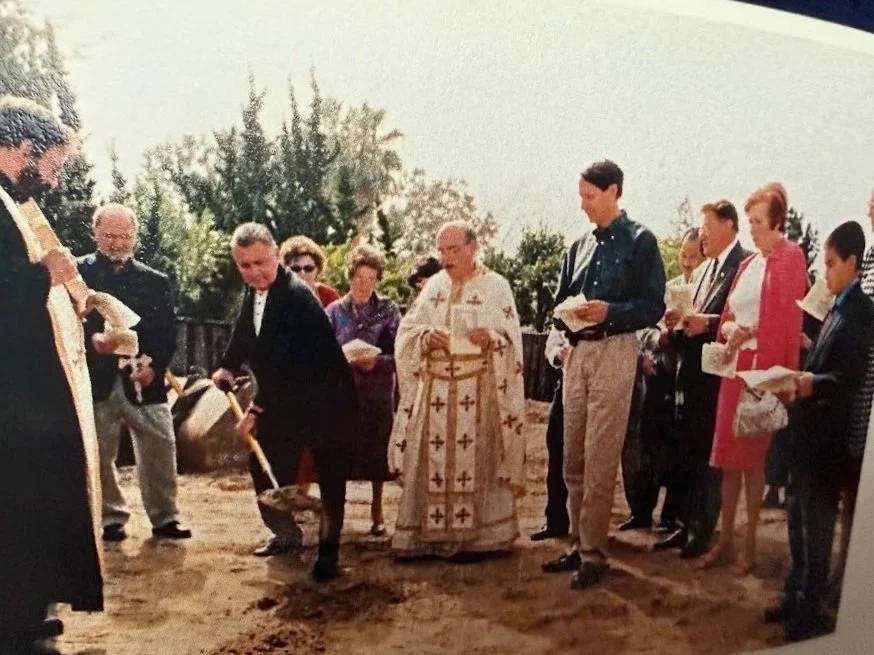
Breaking Ground
The Sunday School Building: From Classroom Space to Financial Lifeline
When the Sunday School building was completed in 2005, parishioners saw it as an investment in the church's children. No one could have known then that years later, that same building would play a key role in helping save the church itself.
By the early to mid-2010s, St. Basil faced growing financial pressure. The church still carried a mortgage, operating expenses kept rising, and every year brought another repair, maintenance project, or unexpected cost. The preschool tenant in the Sunday School building provided valuable rental income, but the parish was still working hard just to keep pace with its financial obligations.
As the years went on, the parish council began taking a closer look at the church's long-term financial picture. The Sunday School building was one of the parish's most valuable assets, yet a growing sense emerged that its income potential was not being fully realized.
At the same time, parish leaders wrestled with another question: what should the building's future be?
During the recession, an exciting possibility emerged. Some envisioned transforming the preschool into an Orthodox school, creating an educational ministry directly connected to the church. It was a compelling idea, and many people loved the vision. But the reality was difficult to ignore. The church depended on the rental income from the building, and giving that up would have created an even greater financial burden at a time when resources were already stretched thin.
In the end, the parish made the difficult but necessary decision to protect the church's financial future. The building would remain a leased preschool facility.
That decision set the stage for an even bigger challenge.
An independent appraisal eventually revealed that the rent being paid for the building was well below market value. The discovery forced the parish council to confront a difficult reality. If St. Basil was going to strengthen its finances and secure its future, it needed the building to generate income closer to what the market would support.
What followed were lengthy and often uncomfortable conversations. Parish council members negotiated with the existing tenant, hoping to reach an arrangement that reflected the property's true value. But finding common ground proved difficult.
No one wanted to disrupt a long-standing relationship. The tenant had been part of the building's story since the beginning. At the same time, the parish council had a responsibility to St. Basil's future. Every dollar left on the table was a dollar that could have gone toward reducing debt, maintaining the property, or supporting ministry.
Ultimately, the parish made the difficult decision to move in a different direction.
A new tenant stepped forward with a long-term lease proposal at triple the rental rate. The impact was immediate and dramatic. The building's income increased significantly, giving the church resources it had never had before.
For the first time in years, St. Basil could begin looking beyond its financial struggles. The additional income allowed the parish to accelerate mortgage payments, and eventually the church achieved something that had once seemed out of reach: the mortgage was paid off!
The sense of relief was enormous. Instead of worrying about how to cover debt payments, the parish could begin planning for the future. Funds could be set aside for maintenance and major repairs. Ministries could move forward with greater confidence. Financial conversations shifted from survival to stewardship.
The building that was originally constructed to serve the church's children ultimately became the tool that helped secure the church's future. When St. Basil needed it most, the Sunday School building became far more than a place for education. It became a lifeline.