
Growing up at St. Basil – Brian Pettis
What are your earliest memories of St. Basil, and how did it feel to you as a child?
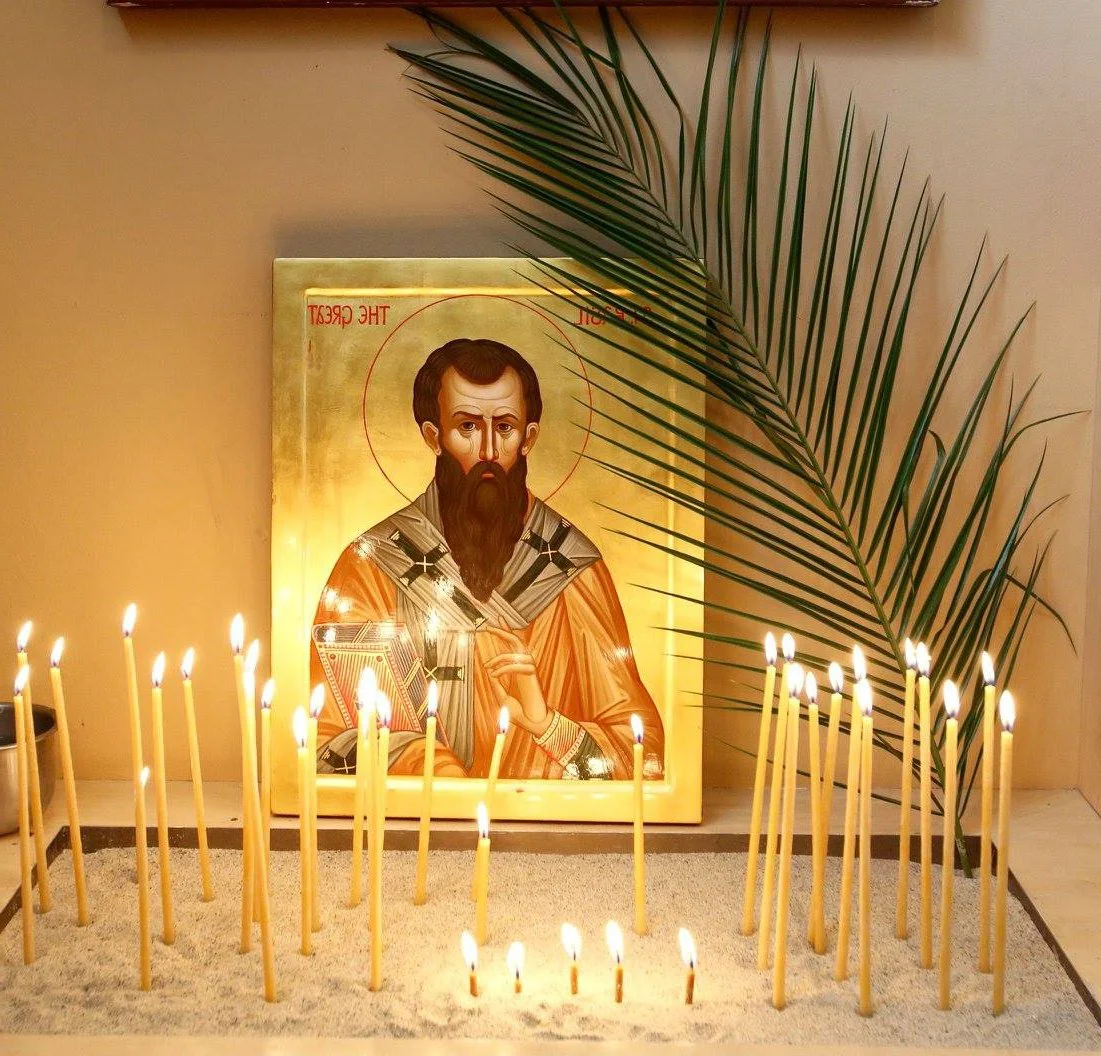
I was pretty young. I think I was three. I don't know when my memories started, but it seemed like when I became an active contributor. I remember going there and cleaning, vacuuming, and getting yelled at for goofing around. I remember working the candle box where the walkway is now, right outside by the secretary's desk. That was the main entrance to the building. I remember working there and, honestly, having fun, dunking candles in the water, cleaning out the wax, then eventually serving at the altar. And I remember the altar being so hot. We had no AC. Near the side doors were windows. We would open up those windows to try to get air in there, and all of us altar boys would crowd that area.
I remember one year, for the Greek Festival, they trucked in a bunch of sand and dumped it in a pile. I was working with a shovel for hours, moving hundreds, maybe thousands, of pounds of sand and dumping it all around to reduce the fire risk because it was all dried-out grass in the back. We would have booths going all the way back there for the Greek Festival. We brought in the sand so people wouldn’t have to walk through super tall hay and get cut up. I remember working extremely long hours and my dad being really proud of me. I think that is where I learned my work ethic. It was actually at the church.
I remember running around the Greek Festival, working the gyro booth, going into the kitchen where all the Greek women were making the loukoumades. I was trying to hustle and get some fresh ones because I loved them so much. I remember getting chased out of there! Even the memories of getting in trouble were good memories. We always had fun.
When I think about my earliest memories, they are really from my childhood, because if I wasn't at school, my time was either at karate or at church. That was normal. I didn't know that wasn't normal for most kids. The majority of my socializing was at church.
How did your friendships with other kids at church differ from your friendships at school?
I felt like I fit in with the kids at church. We truly had something in common. Everybody got along. I'd hang out with everybody at church, and I don't even know if, outside of church, any of us would have been friends because we were all pretty different. But it was this culture of “We're all here together, and we're all going through the same Sunday school classes together, and our parents are talking, and we have no one else to play with except each other.”
The relationships were deeper. I was much more honest about who I was and more willing to be open. Most of the kids I went to school with were extremely well off, and I just didn't fit in. They had video game consoles, cable TV, AC, the latest clothes, and I didn’t. Those were the things they would talk about, and I couldn't relate. They had a mom who would show up all the time because she wasn’t working full time. They had married parents. All those things mattered. When I showed up to church and hung out with the other kids, none of that mattered.
I was a troublemaker. They looked out for me. There were times when someone said something, and I actually stopped doing what I was doing. It made a difference because they had enough courage to say it.
My relationships with the people at church were real. They were meaningful. It wasn't about any of the stuff that seemed so superficial with the kids at school. It brought together a bunch of us who really didn't have much in common, except that we were all Greek Orthodox and would wait around for at least an hour after church, hanging out together.
How do you think growing up in the St. Basil community shaped who you are today?
I went through some pretty hard times. I definitely was on the wild side. My dad genuinely believed that I was close to getting into the kind of trouble that would land me in jail or something worse. The truth was, what actually held me back was a lot of the stuff in the church. It was all the lessons I had been learning.
For most folks, it probably looked like I wasn't paying much attention. I was kind of a wild dude. But compared to the folks I hung out with, I was actually holding back. It was because of my faith. I definitely remember being worried that God was watching everything I was doing. When people I hung out with started going in a certain direction, it was those church relationships and the values I learned there that held me back. I even remember ditching some pretty crazy situations to go hang out with church people. It was both an escape from the bad places and people I was hanging out with and something real there. Something that endured for all these years.
I think there was still that part of me that wanted to bring honor to my life and to the family name. I wanted to be good. I wanted to be seen as somebody other than a troublemaker. I think that shaped my desire to do more with my life, which led me to the military.
We had an Orthodox chaplain while I was deployed in the Middle East. If I wasn't out on a mission on Sunday, I was going to church at our military installation. I never flew a day while on deployment without the little red Orthodox prayer book with me. It came in handy because we had some really close calls.
When my wife Gabby and I got married, it was important to me that we were both Orthodox. She converted, and now my kids are Orthodox because of it. It was important for me to raise my kids in the church. But it all started because of the lessons I learned in church and deep down inside, really wanting to be a good person and a good Christian.
Growing Up at St. Basil – Stacy Froumis
What are your earliest memories of St. Basil? How did it feel to you as a child?
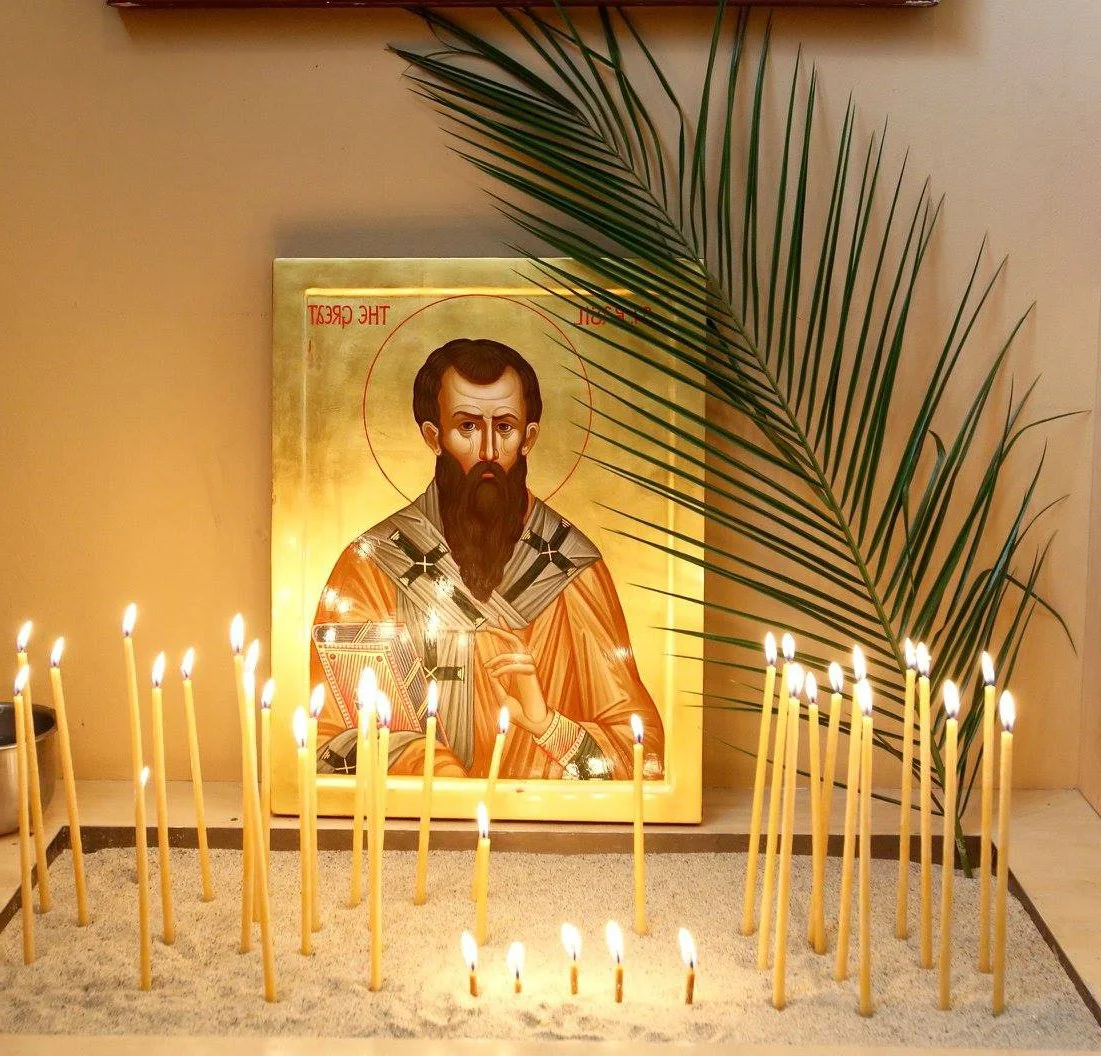
I started coming to St. Basil soon after it opened when I was five years old. My earliest memories are of walking into the original narthex (where the secretary’s desk stands today), lighting a candle, and going straight to Sunday School. I liked my Sunday School teachers and I fondly remember coloring our weekly pages while learning about that Sunday’s Gospel reading. Afterward, we would go into church in time for communion and to hear the sermon at the end of liturgy. Fr. John Bakus had a booming and engaging voice. Even though I was too young to fully grasp his message each week, I always enjoyed listening to him speak.
How did your friendships with other kids at church differ from your friendships at school?
They differed a great deal, and I felt it most between the ages of 11 and 15. Those were difficult years for me. I struggled academically, faced bullying at school, and grieved the loss of multiple loved ones. Church became the one place I could go and truly lay aside all worldly cares. The kids at church provided a safe space for me. I never had to worry about being bullied or left out when I was with my church friends. I never had to pretend to be a certain way just to fit in. That safety meant the world to me. As we grew older and got our driver’s licenses, we used to go out for lunch together or hang out at the mall after church. I treasure the memories I have with the kids I grew up with at St. Basil. Though they have all since moved away or left the parish, leaving me as the last remaining parishioner who grew up at St. Basil since the very early days, those bonds shaped who I am.
What role did the church play in your day-to-day life growing up?
Growing up, the church was my home base. No matter what school I attended or what activities filled my week, there was always church on Sundays. Beyond that, for a time, there was youth choir rehearsal on Friday afternoons led by Fr. Dean, as well as Greek school and Greek dance classes during the week. Even when I wasn’t at church, I had my Orthodox prayer book at home, and the stories and lessons I learned on Sundays stayed with me throughout the week.
What are some of your favorite childhood memories connected to St. Basil?
I loved singing in the youth choir when I was about ten years old. Fr. Dean taught us songs he wrote himself, which led to incredible opportunities, such as performing on a local TV station and visiting a recording studio to make a tape for the Department of Religious Education. I also have fond memories of rehearsing for the annual Christmas pageant and missing school to attend the Good Friday retreats each year. Of course, the annual St. Basil Greek festival was also a highlight I looked forward to. As soon as we were old enough, Fr. Dean would put us kids to work helping at the game or snow-cone booths. Everyone pitched in to make the event a success every year. Those are some of my favorite childhood memories.
Looking back, how do you think growing up in this community shaped who you are today?
St. Basil has been a constant in my life for 40 years. The lessons I've learned, not only from sermons and Sunday School but also from the wonderful people and experiences I’ve encountered over the years, have had a huge impact on my life. Participating in events and activities, being part of a community that feels like family, and keeping Christ at the center of it all have truly shaped who I am today. St. Basil is where I met my husband and where my children were baptized. I leaned heavily on the St. Basil community during the most devastating time in my life when I lost my son. Watching my daughter grow up in the same church that shaped my life has been a full-circle moment for me, and I pray that my family continues to be a part of St. Basil for generations to come.
The Sunday School Building: A Dream Built by Faith and Determination
Long before it became one of the most important assets in the history of St. Basil Greek Orthodox Church, the Sunday School building was simply an idea—a dream shared by parish leaders who saw a growing need for space dedicated to the church's children.
In the late 1990s, Sunday School classes were being held in temporary classroom spaces created within the church itself. There were sliding partitions that turned the church hall into four different classroom spaces whenever Sunday School was being held. As the parish grew, so did the desire for something more permanent. Father Dean, who had long envisioned expanding opportunities for the parish's youth, believed a dedicated educational building would be an important investment in the future of St. Basil.
In 1999, the idea gained momentum and parish leadership began to develop a plan to build a preschool that would serve local families during the week and provide classroom space for Sunday School on weekends.
What seemed like a straightforward vision quickly became a complicated undertaking.
Before construction could begin, the parish faced an extensive approval process with Santa Clara County. Nearby residents raised concerns about traffic, noise, and the impact of the project on the neighborhood. Five community meetings were held as the parish council worked to address those concerns and secure the necessary permits.
Demetris Paraskevopoulos, Tony Pettis, and Luke Stamos became key figures in the effort, helping navigate the maze of county regulations and requirements. The parish agreed to every condition that was placed before it, including installing a higher fence to reduce noise and adding a pitched roof to the modular structure to improve its appearance. It was a lengthy process, but the church remained committed to seeing the project through.
Then came the challenge of paying for the building.
The building's cost reached approximately $235,000. While donations covered much of the expense, the parish still faced a substantial funding gap. Rather than abandon the project, parishioners stepped forward with creative solutions. Members of the congregation purchased $5,000 notes, lending money to the church while earning interest on their investment.
When additional funding was needed, one family took an extraordinary step, borrowing against their own home to provide a $100,000 loan to the church. Their willingness to assume personal risk gave the parish the time it needed to complete the project and eventually refinance the debt.
The Sunday School Building: From Classroom Space to Financial Lifeline
When the Sunday School building was completed in 2005, parishioners saw it as an investment in the church's children. What no one could have known at the time was that years later, that same building would play a key role in helping save the church itself.
By the early to mid 2010s, St. Basil was facing growing financial pressure. The church still carried a mortgage, operating expenses continued to rise, and every year seemed to bring another repair, maintenance project, or unexpected cost. The preschool tenant in the Sunday School building provided valuable rental income, but the parish was still working hard just to keep pace with its financial obligations.
As the years went on, the parish council began taking a closer look at the church's long-term financial picture. The Sunday School building was one of the parish's most valuable assets, yet there was a growing sense that its income potential was not being fully realized.
At the same time, parish leaders found themselves wrestling with another question: what should the future of the building be?
During the recession, an exciting possibility emerged. Some envisioned transforming the preschool into an Orthodox school, creating an educational ministry directly connected to the church. It was a compelling idea, and many people loved the vision. But the reality was difficult to ignore. The church depended on the rental income from the building, and giving that up would have created an even greater financial burden at a time when resources were already stretched thin.
In the end, the parish made the difficult but necessary decision to protect the church's financial future. The building would remain a leased preschool facility.
That decision set the stage for an even bigger challenge.
An independent appraisal eventually revealed that the rent being paid for the building was well below market value. The discovery forced the parish council to confront a difficult reality. If St. Basil was going to strengthen its finances and secure its future, it needed the building to generate income closer to what the market would support.
What followed were lengthy and often uncomfortable conversations. Parish council members worked to negotiate with the existing tenant, hoping to reach an arrangement that reflected the property's true value. But finding common ground proved difficult.
No one wanted to disrupt a long-standing relationship. The tenant had been part of the building's story since the beginning. At the same time, the parish council had a responsibility to the future of St. Basil. Every dollar left on the table was a dollar that could have gone toward reducing debt, maintaining the property, or supporting ministry.
Ultimately, the parish made the difficult decision to move in a different direction.
A new tenant stepped forward with a long-term lease proposal at triple the rental rate. The impact was immediate and dramatic. The income generated by the building increased significantly, providing the church with resources it had never had before.
For the first time in years, St. Basil could begin looking beyond its financial struggles. The additional income allowed the parish to accelerate payments on its mortgage, and eventually the church achieved something that had once seemed out of reach: the mortgage was paid off!
The sense of relief was enormous. Instead of worrying about how to cover debt payments, the parish could begin planning for the future. Funds could be set aside for maintenance and major repairs. Ministries could move forward with greater confidence. Financial conversations shifted from survival to stewardship.
The building that was originally constructed to serve the church's children ultimately became the tool that helped secure the church's future. At a time when St. Basil needed it most, the Sunday School building became far more than a place for education. It became a lifeline.